BAMBU LAB
H2C
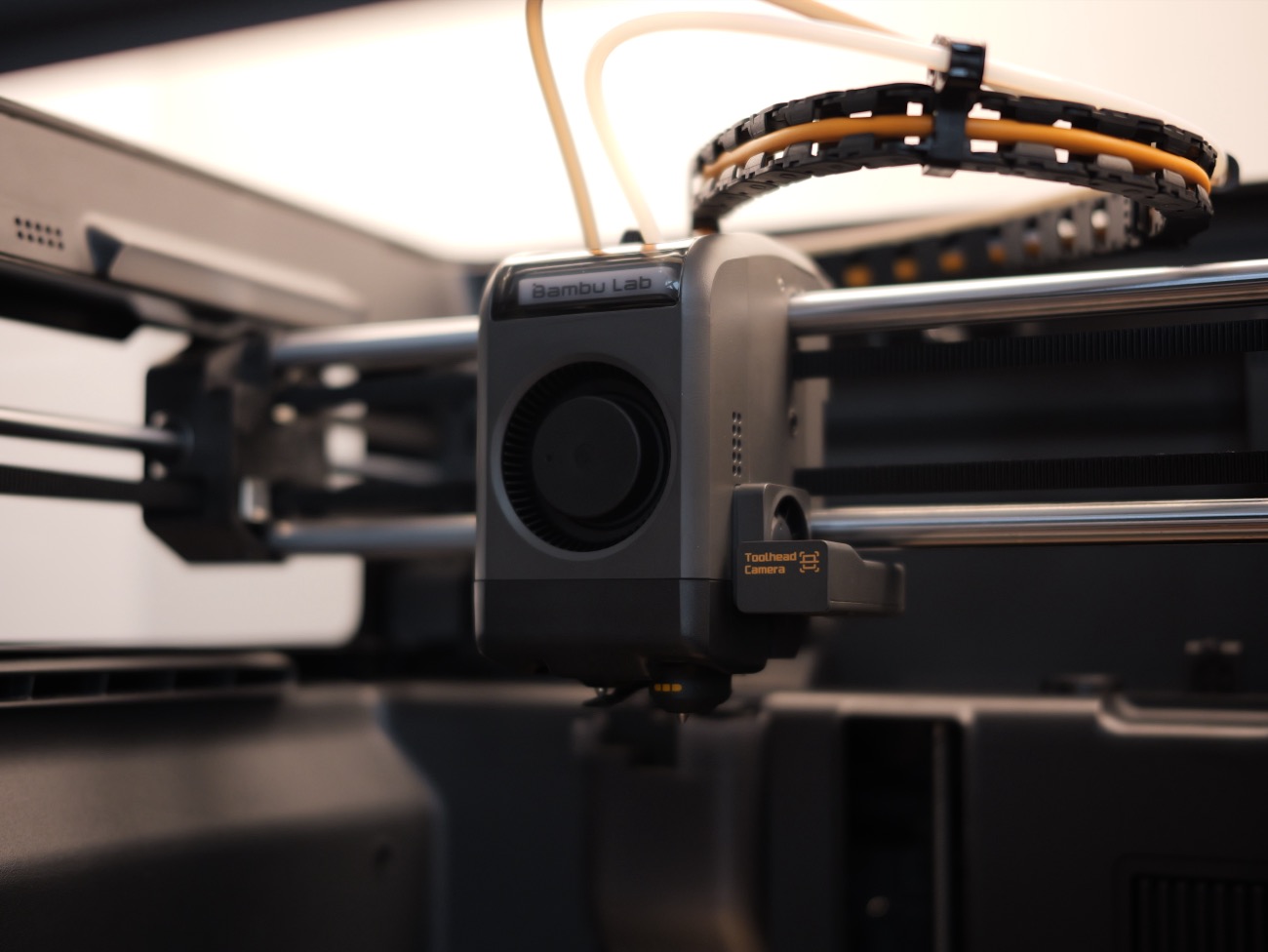
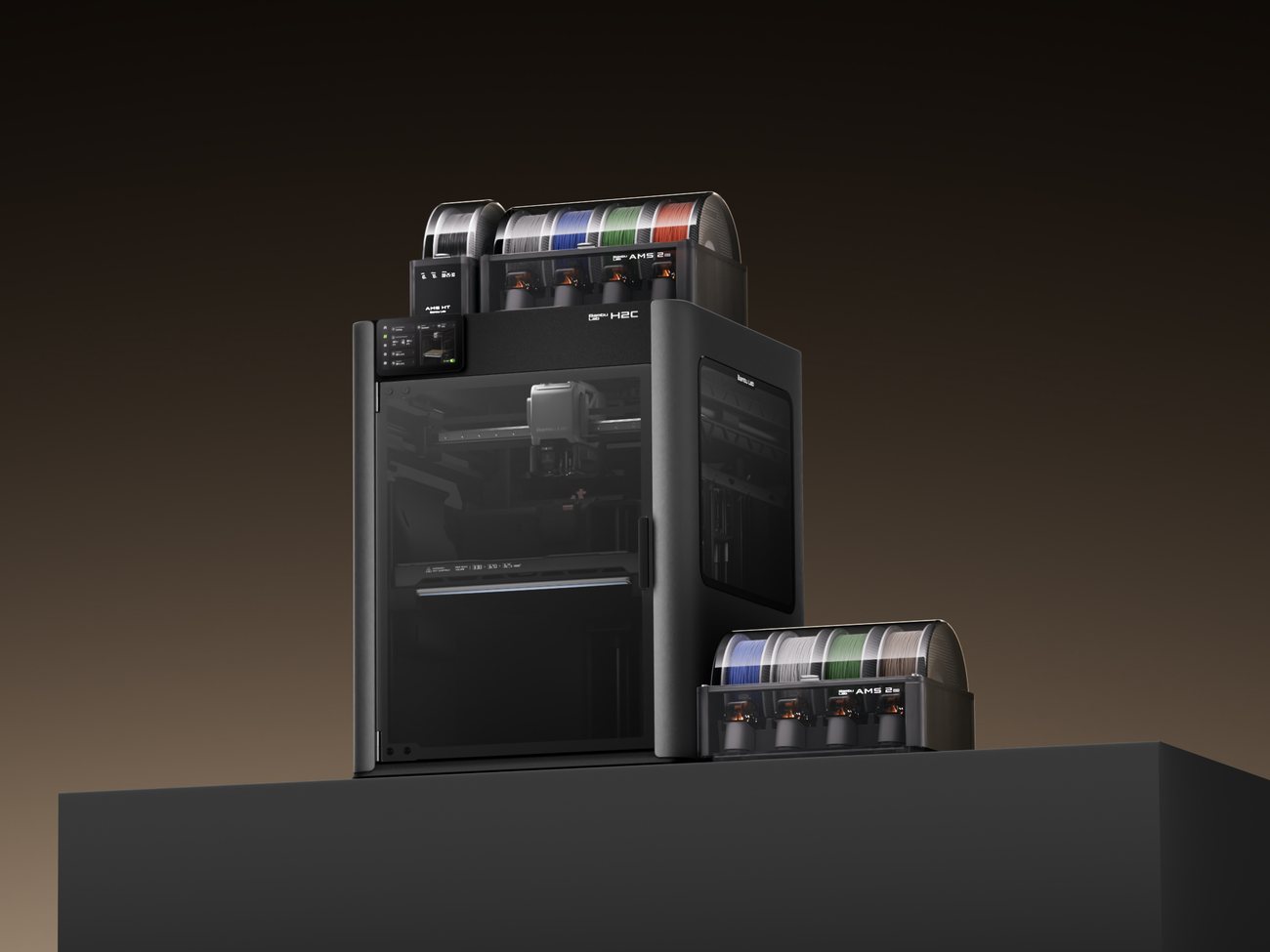
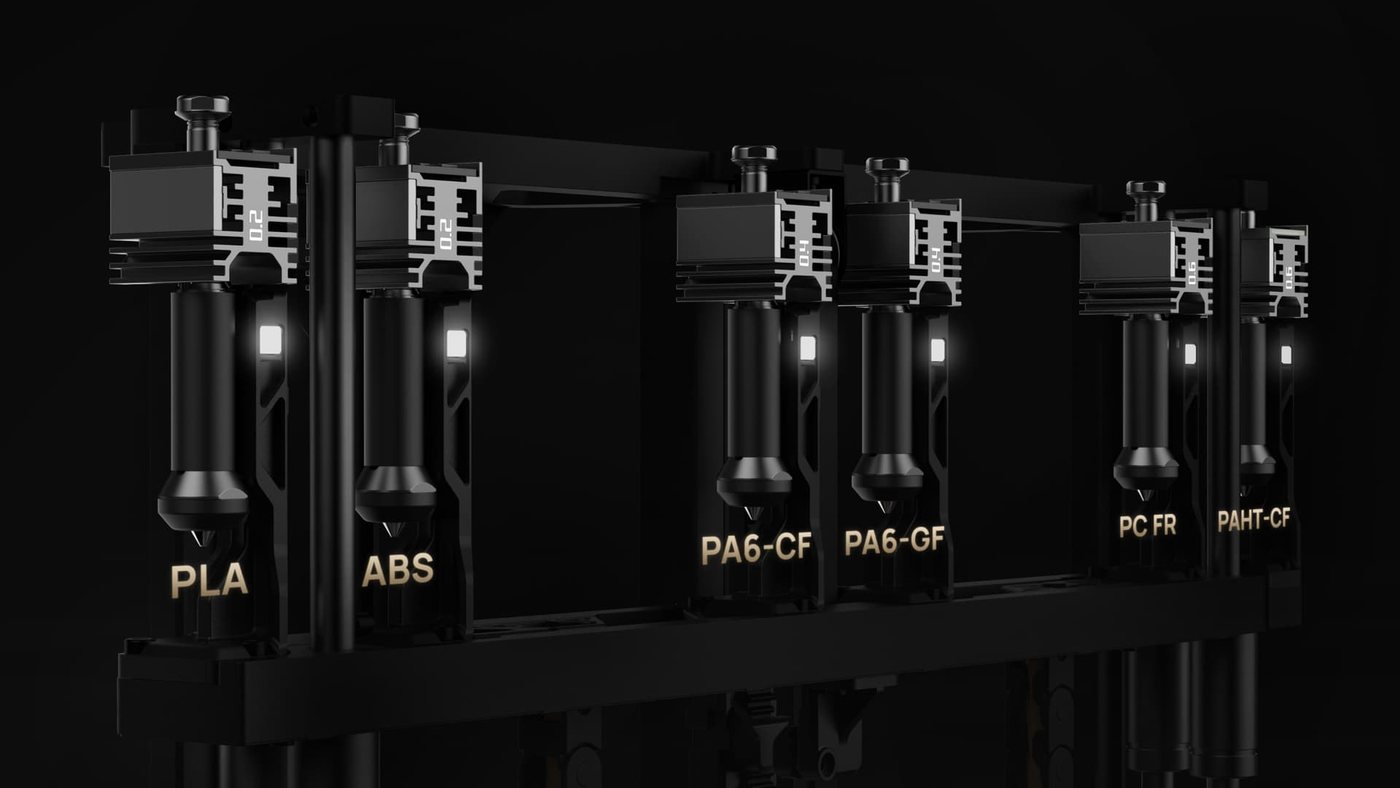
The H2D platform plus Vortek: a rack of six induction-heated hotends that swap onto the toolhead, plus one fixed nozzle — seven nozzles for seven colors or materials with almost no purge.
Swap the hotend, not the filament
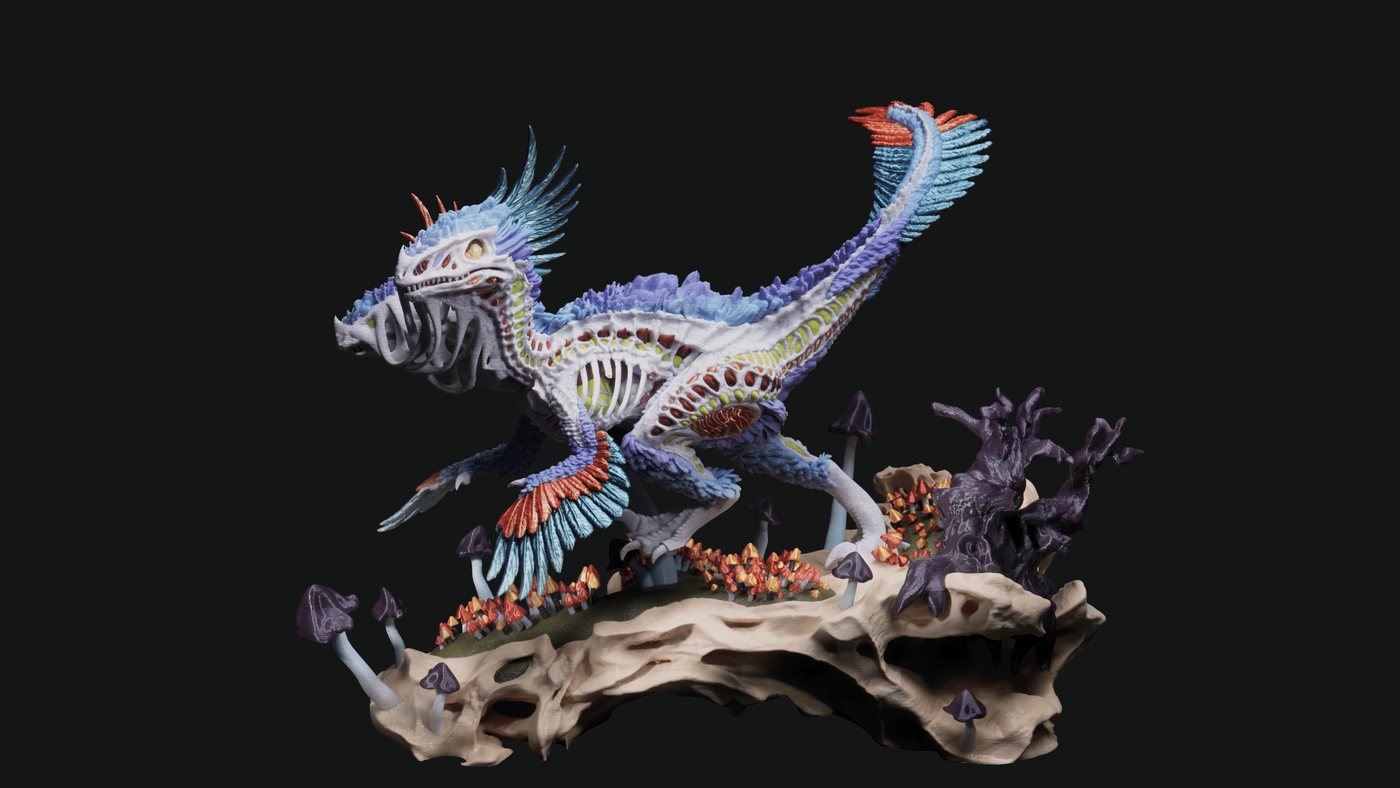
Multicolor on a single-nozzle printer means purging filament at every color change — on a 6-color print the waste can outweigh the model. The H2C solves it with Vortek: each color lives in its own hotend, and the printer simply swaps hotends, induction-heating the new one in about 8 seconds. Per Bambu Lab (calculated in Bambu Studio), the same 6+6-color dinosaur purges 532 g on the H2C versus 3,032 g on the H2D. My H2C was redeemed with MakerWorld points — closing out the challenge I set myself in June 2025.
What the H2C does well
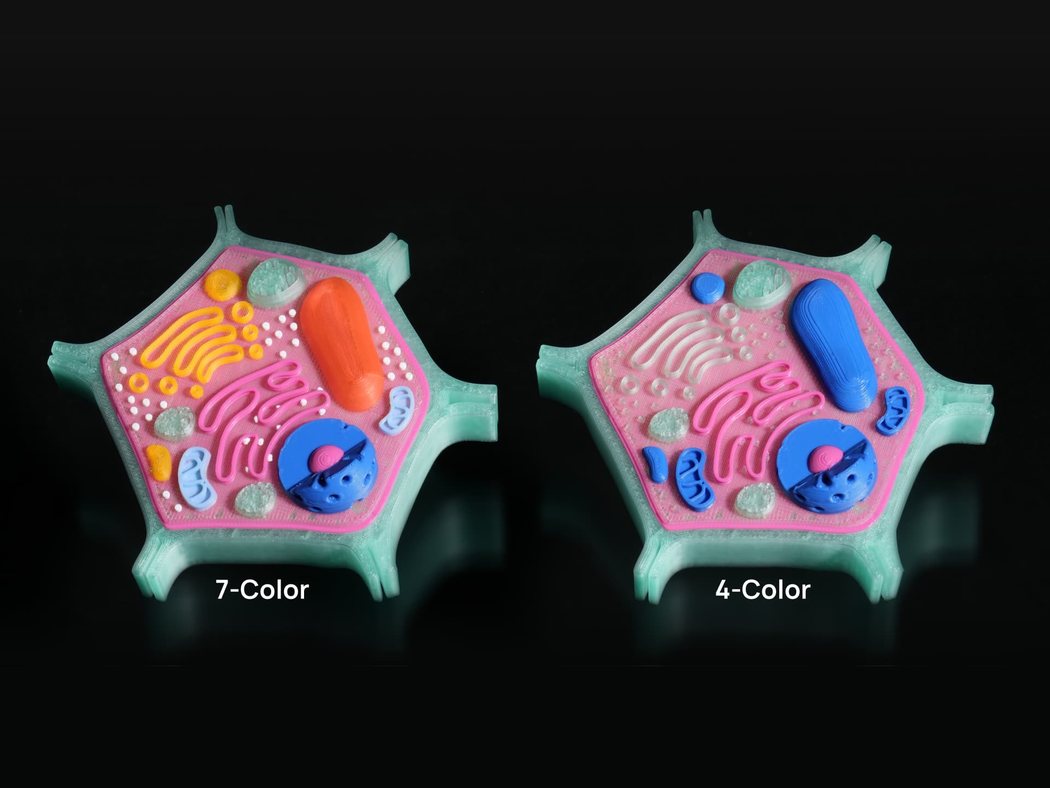
7 nozzles, 7 colors per print
Six Vortek hotends + one fixed nozzle: seven colors or materials in one print, with the seventh free for support. Add AMS 2 Pro units to manage up to 24 spools.
Far less waste
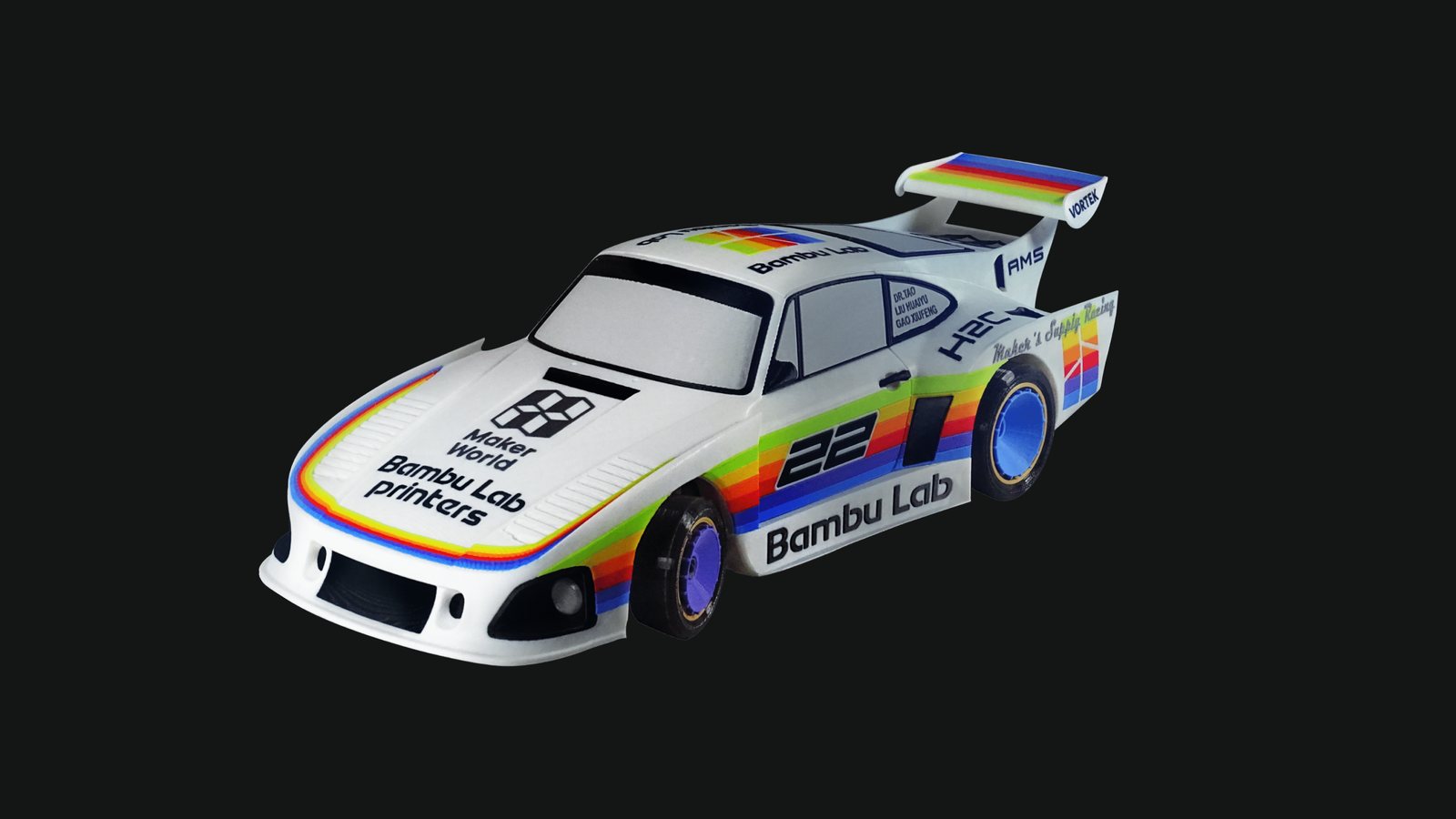
Each color sits in its own hotend, so there's almost no purge on color changes (except when loading a fresh filament). Bambu's example: a race car purges 522 g on the H2C vs 2,051 g on the H2D, in 47% of the X1C's print time.
8-second induction heating
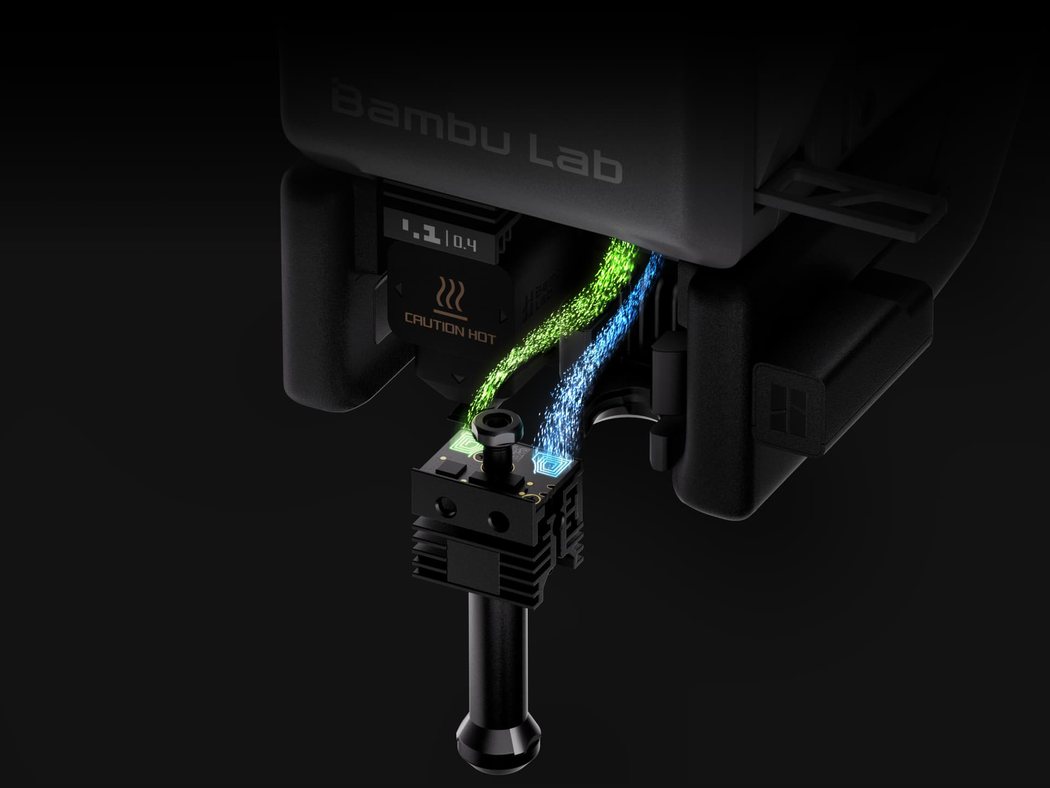
Vortek hotends heat by induction, reaching PLA temperature in about 8 seconds; the contactless design has no pins to wear out. Every hotend's offset is calibrated automatically.
One hotend per material
Dedicate a hotend to each filament — PLA, ABS, PA6-CF, PC FR… — so old material never contaminates new. All seven reach 350 °C.
Everything from the H2D
A 65 °C heated chamber, G3 + H12 HEPA + carbon filtration, a 10 kg servo extruder, an AI nozzle camera and a UL94 V-0 flame-retardant chamber.
Multi-material in one piece
Print robots with TPU joints built into PLA bodies, or a drone frame combining PA6-GF + TPU + PC FR in one run — no assembly, no glue.
Where it's not yet optimal
No machine is perfect — here are the trade-offs worth knowing before you buy, drawn from hands-on use and international reviews.
The priciest H2
The AMS 2 Pro combo launched at around $2,399 — well above the H2D. It really pays off only if you regularly print four or more colors.
Less X width than the H2D
The Vortek rack takes space: printing on the right nozzle gets 305 mm of X, and 330 mm across both (vs 350 mm on the H2D).
Each swap still takes time
Heating takes ~8 seconds, but reviewers measure about 30 seconds per full hotend swap — quicker than purging, not instant like a true tool-changer.
The H2C in Bambu Lab's photos
Technical details
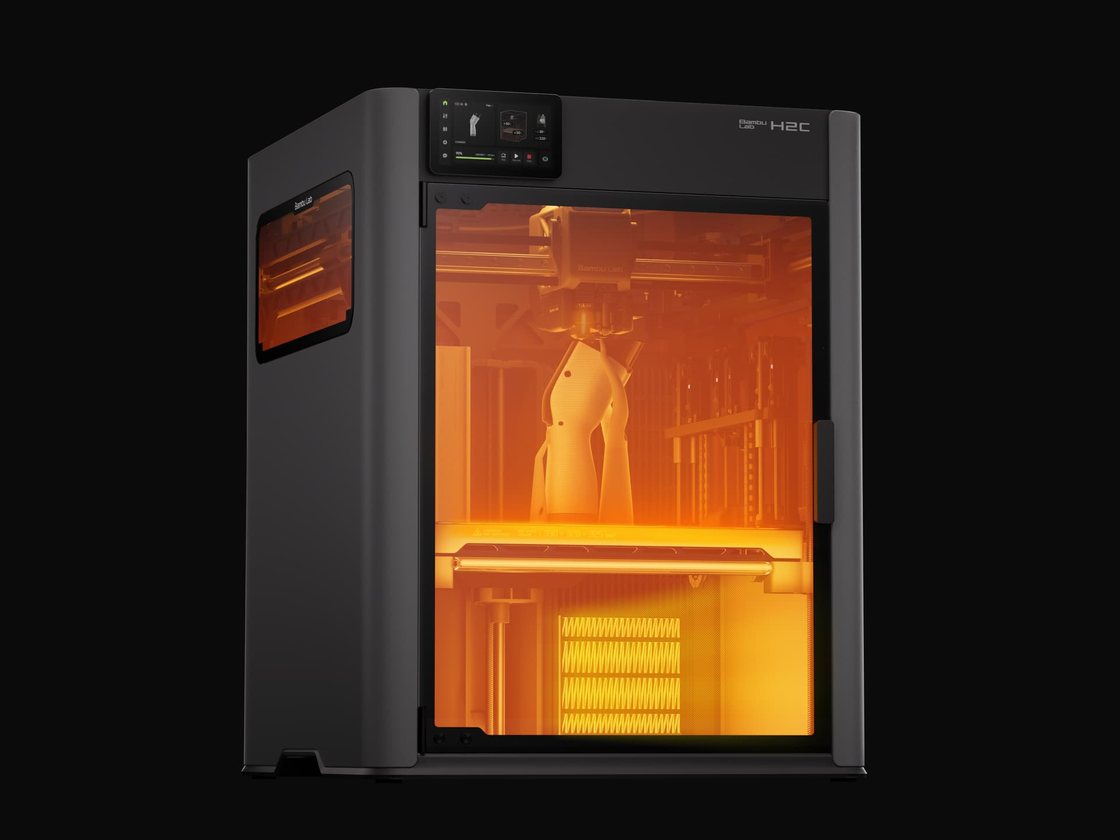
Watch the full H2C hands-on
Since the H2C is built on the H2D, my video focuses on Vortek — how it swaps hotends, heats them and saves filament. For everything else, see my H2D and H2S pages.